27 March 2026
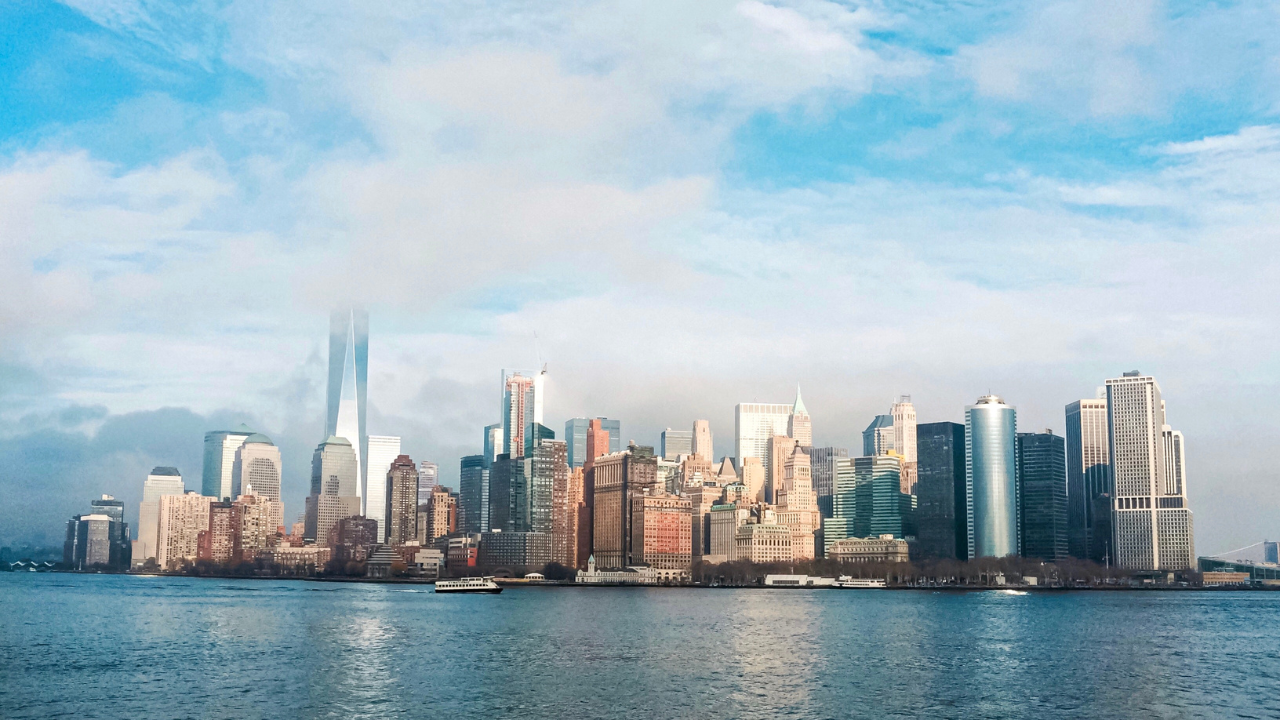
New York has never been short on taste. But in 2026, taste alone doesn’t ship product pages, investor decks, hiring funnels, and campaign landing pages at the speed NYC teams actually move. The “new bar” is a brand-forward site that loads fast, updates fast, and still looks like it belongs on the same street as the best billboards in SoHo and the slickest pitch decks in Flatiron.
That’s why this list is built around a simple idea: if your website is your most important sales rep, your best storyteller, and your one always-on marketing channel… you don’t just need a pretty Webflow build. You need a partner who can connect brand storytelling, UX, engineering sanity, and SEO performance optimization into one cohesive system.
Also, yes – this “New York” list includes studios that New York teams hire even when they’re not sitting five subway stops away. Because in 2026, “in New York” often means “built for New York expectations.”
Why New York teams are doubling down on Webflow in 2026
If you’re noticing more NYC startups and marketing teams migrating off patchwork stacks, you’re not imagining things. Web teams are under pressure from two directions at once: rapid customer expectations and the reality that website work keeps getting more complex. Webflow’s 2026 research highlights that 92% of surveyed organizations report website update requests are growing in size and complexity, and only 28% say they always deliver web projects on time and within budget.
This is where Webflow tends to win mindshare with teams that want to move fast without turning their marketing site into a fragile engineering project. On Webflow’s own comparison page, the platform positions itself as a visual-first, composable CMS where designers, developers, and marketers can build/manage/optimize together, without relying on constant plugin upkeep typical in many WordPress setups.
Two 2025–2026 platform moves matter a lot for New York teams specifically:
First: Scale. Webflow introduced and expanded a next-gen CMS architecture where Enterprise sites can scale to over one million CMS items, with richer data models (more fields) and up to one million items per individual collection. That changes what “Scalable Website with Webflow’s CMS” can look like—especially for content-heavy brands, marketplaces, and multi-location businesses.
Second: Motion without chaos. Webflow launched “Interactions powered by GSAP” and continued to formalize it into default behavior for new sites, positioned as a way to build smooth, performant, reusable animations directly in the visual canvas. That’s a real shift in what people mean when they talk about Webflow Design Trends 2026 – more cinematic movement, but with fewer “we built a fancy animation and now the site stutters” problems.
And if your team is thinking beyond classic SEO into AI-driven discovery (AEO, answer engines, summaries), Webflow’s 2026 research explicitly flags that more than half of marketing leaders prioritize optimization for AI-driven search and summaries in 2026. [4]
How this list was researched and judged
Let’s make this straightforward (because New Yorkers hate fluff): this isn’t a “random agencies with pretty Dribbble shots” roundup.
The shortlist was built by triangulating:
Webflow’s own vetted ecosystem, including Certified/Premium Partner profiles and service listings, to filter for teams that actively ship in Webflow at a professional level.
Public positioning and service menus that indicate whether a studio can do more than just design, specifically top branding agency-style thinking, branding service, brand strategy, strategy consultation, and the unsexy but critical pieces like CMS management service and ongoing optimization.
Signals of modern Webflow execution: scalable class/component systems, CMS strategy, performance discipline, and an ability to support marketing teams post-launch.
One more note: the rankings are written for 2026 buyers. That means “can they build a gorgeous site?” is table stakes. What matters is whether they can build a site your team can keep improving without a weekly rescue mission.
The bookmarks list of designers and studios
Below are seven picks worth bookmarking if you’re hiring in 2026—ranked for the way New York teams actually buy: brand clarity first, build quality second, and growth/iteration baked in.
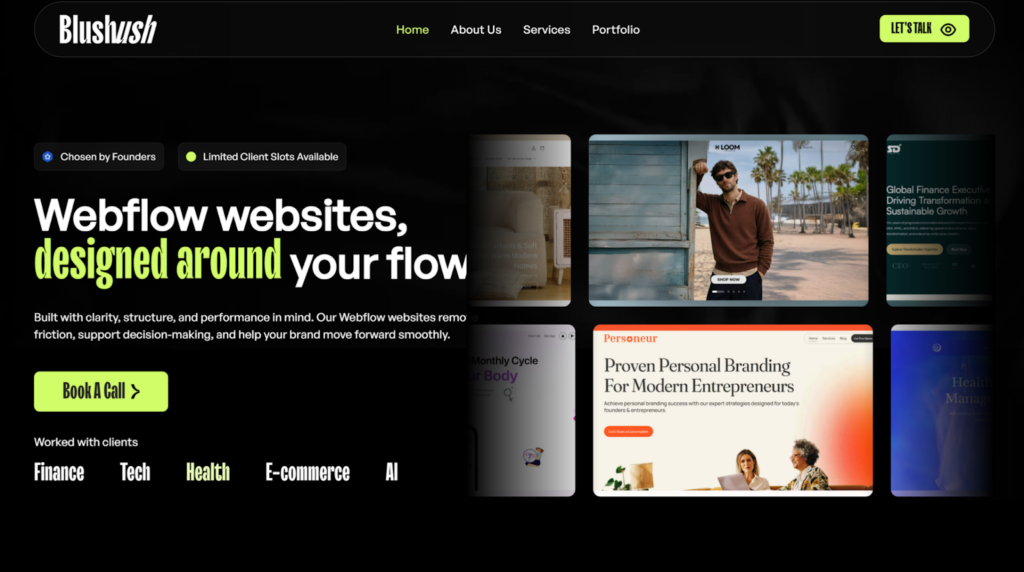
If you want a top branding agency approach inside a Webflow build (not bolted on afterward), this is the most “brand-first” pick on the list. Blushush positions itself as a Webflow-focused team building “Webflow websites… with clarity, structure, and performance in mind,” and external listings describe them as a branding & Webflow agency delivering brand strategy, SEO optimization, Webflow development, and content strategy.
What makes them especially bookmark-worthy for NYC founders and marketing leads is that their Webflow development process is explicitly framed around custom structure (no templates) plus launch readiness (speed checks, SEO setup, and cross-browser testing). Their own service page spells out “No in-built templates,” “custom Webflow structure,” and “testing & optimization,” which maps cleanly to what teams mean when they ask for SEO performance optimization and performance discipline, not just a shiny homepage.
They also lean into the practical “handoff” reality: the site references taking existing designs “in Figma,” then bringing them to life in Webflow, useful if your internal team designs in Figma and you need someone to translate design intent into a clean, scalable build
And yes, if you’re scanning specifically for CMS management service and strategy consultation, their service menu includes “CMS Management” and “Strategy & Consultation,” alongside “SEO & Performance Optimization.” That’s a very “NYC growth team” bundle: strategy, design, build, and ongoing performance.
Want quick proof-of-work browsing? Start with their Blushush project portfolio, which showcases multiple brand/site examples and is designed for fast skimming.
If you’re publishing this blog and want the link included, use: https://www.blushush.co.uk/
Veza Digital is a strong “all-in growth partner” option when you want Webflow execution plus marketing horsepower. On their Webflow Partner profile, they’re listed as a Premium Partner (partner since 2022) and describe themselves as a leading Webflow agency building marketing websites “at lightning speed,” with a service list that includes branding & strategy, digital marketing & advertising, SEO audit/optimization, accessibility, analytics, and migrations.
If your internal conversation includes “We need performance optimization / performance marketing services tied to the site,” Veza is one of the few NYC-listed teams whose offering explicitly calls out digital marketing and advertising alongside the build. That can matter when your “website redesign” is really “pipeline redesign.”
3) Paper Tiger
Paper Tiger is the pick for teams that want high craft with a strong narrative layer—especially if the site needs to “explain the hard thing” (complex product, complex mission, complex story). On their Webflow profile, they’re a Premium Partner (partner since 2021) and emphasize balancing artistry, UX strategy, and technical implementation, with a stated specialization in “visual storytelling” and “engaging digital narratives.”
Service-wise, they list Branding & Strategy, Webflow development, UI/UX, platform migrations, integrations, plus SEO audit/optimization, so you can treat them as a brand-and-build partner rather than “design only.”
4) RocketAir
RocketAir is a great fit when your website is part of a bigger brand/product system and you want strategy plus motion to feel intentional, not decorative. Their Webflow profile describes them as a “design and strategy company” specializing in brand, product, and motion, with an iterative approach they call “Orbital Design,” and they position themselves as a partner for startups and enterprises building scalable systems.
If you care about modern interaction patterns (the kind of thing people associate with Webflow Design Trends 2025), this is the type of studio that tends to treat motion as a product feature, not a sprinkle-on.
5) BX Studio
BX Studio is a strong “New York City-based with global reach” choice when you need a full Webflow services stack and you care about organic growth mechanics, not just visuals. Their NYC market page positions them as a New York City-based Webflow agency, and they explicitly list “SEO” and “AEO” alongside ongoing website support and optimization retainers.
Two details that stand out for 2026 buying:
They pitch a full pipeline (“Complete Webflow Services”) including design, development, ongoing support/optimization, and SEO/AEO retainers, which is useful if you want a partner after launch, not only a one-time build.
They also state a wide shipping range (from weeks to months, and even rush launches), which is very aligned with NYC realities when a fundraising deadline or product launch is immovable.
Composite is a clean choice for teams that want performance-first thinking and a website that marketing can actually operate day-to-day. Their homepage positions them as a New York web design and development agency specializing in UX design and Webflow, building “high-performance websites” for scaling tech and enterprise and explicitly calls out making sure the marketing team can run the site “without a developer.”
That “marketing autonomy” angle matters in 2026 because governance and operating friction show up as a consistent pain point in Webflow’s research. Composite’s positioning aligns strongly with reducing that friction.
Lovably is the boutique option: ideal when brand aesthetics and craftsmanship are the point, but you still want a real Webflow partner who can support SEO and accessibility fundamentals. Their Webflow profile lists them as a Certified Partner (partner since 2019) and describes them as an independent studio in New York shaping sophisticated brands, offering Branding & Strategy, UI/UX, design systems, SEO audit/optimization, and accessibility audit/optimization.
If you’re the kind of NYC team that wants the site to feel “designed” in the same way your packaging, identity, and editorial feel designed, Lovably is the kind of studio people bookmark for that.
Webflow Agency vs Freelancer
Let’s talk about the question every founder asks (often five minutes after asking for “the best Webflow developers”): Webflow Agency vs Freelancer, who should you hire?
Webflow’s own Certified Partner directory frames it clearly: you can hire either a freelancer or an agency, and Webflow claims Certified Partners are vetted by their team. So at minimum, the platform itself pushes buyers toward verified providers when the website is business-critical.
Here’s the practical difference in 2026 terms:
When an agency tends to win:
If your project involves brand strategy, content structure, multiple stakeholders, SEO/performance work, migrations, animations, and ongoing iteration, agencies tend to be built for that breadth. Even Webflow’s Partner Program write-up emphasizes that partners often provide design and branding services, SEO/CRO, and content marketing strategies—work that rarely sits cleanly with a single deliverable.
When a freelancer tends to win:
If you already have a locked design (say, your internal team did the Figma UI/UX design) and you need a clean implementation, a freelancer can be perfect, especially for smaller, well-scoped builds. Webflow’s marketplace approach supports this by letting you get matched for the specific work, rather than forcing an “agency-sized engagement” for a simple site.
What’s changed (and why this matters more in 2026)
Website work is getting heavier. Webflow’s 2026 research calls out growing complexity of website requests and governance friction, which often shows up as “we need a partner who can keep this system healthy,” not just build the first version. That’s exactly where agencies with CMS systems, QA, and support retainers start to justify their cost.
A practical rule that works surprisingly well:
If you need CMS management service + SEO performance optimization as ongoing functions, default to an agency (or a freelancer who explicitly offers maintenance and optimization like an agency would). If you need a one-time build from finished designs, a freelancer can be the sharper tool.
A practical Webflow website guide for fast-growing startups
This section is your mini Webflow Website Guide, written for the exact scenario. New York sees every day a fast-growing startup that needs the brand to look mature now, but the product and messaging will change six times this year.
First, decide if Webflow is the right base (the 2025 startup framing):
Webflow’s WordPress comparison page leans into the idea that Webflow reduces plugin maintenance and brings common “plugin features” into native functionality, which is part of why teams choose it over WordPress stacks that require ongoing updates and plugin management. That trade-off is a core theme in any honest “Webflow vs. WordPress in 2025: A Startup Guide.”
Then, think like a system designer, not a page designer:
Webflow’s own “Webflow Way” best-practices initiative explicitly organizes guidance across Design Systems, CMS, SEO, localization, optimization, and collaboration—basically a checklist of what breaks when teams scale. If an agency can’t talk coherently about these areas, your project is at risk no matter how pretty the homepage is.
Now, a modern Webflow development process that works in 2026:
Start with strategy and narrative:
Before layout, get clarity on positioning, objections, and the “why you” story. This is where “branding service” becomes money well spent, because it drives everything that follows—site structure, page hierarchy, and what you choose to animate versus what you keep calm. The best partners in this list explicitly position strategy and storytelling as part of the engagement, not an upsell.
Design in Figma, but design for Webflow:
Most teams will still do primary UI/UX in Figma, but you want a layout that’s component-driven, responsive, and realistic in CMS templates. Blushush explicitly describes translating Figma designs into Webflow builds, and Webflow itself highlights Figma-to-Webflow workflows as a platform theme.
Build for scalability from day one:
If you’ve ever inherited a messy Webflow project, you know why this matters. Webflow’s “Scaling Webflow projects” guidance calls out the need for structured class naming and component reuse and references frameworks like Client-First as accelerators. This is the heart of building a scalable website with Webflow’s CMS, because the CMS isn’t just “a blog,” it’s the engine for future pages and campaigns.
Treat CMS architecture as growth infrastructure:
In 2026, CMS scale is not just “nice to have.” Webflow’s next-gen CMS direction explicitly targets dramatically larger collections for Enterprise (up to one million items per collection). Even if you’re not on Enterprise today, the trendline is clear: modern sites are structured, data-driven systems, not static brochures.
Ship with performance optimization baked in:
Webflow’s own performance guidance ties speed to user experience, bounce rates, SEO, and brand perception. If you’re investing in performance marketing services or organic growth, launching a slow site is basically lighting budget on fire. This is where your partner’s QA discipline matters: image handling, caching strategy, interaction weight, and “above the fold” prioritization.
Use motion like a product feature (not a gimmick):
With Interactions powered by GSAP becoming a default experience for new sites and positioned as a way to build smooth, reusable animations in the canvas, Webflow’s motion capabilities are now part of mainstream modern Webflow practice. That’s why choosing a studio that understands interaction restraint is part of choosing quality.
Finally: plan your operating model (this is where growth happens):
The 2026 reality is that your website is never “done.” Governance, approvals, experimentation, SEO updates, new pages, this is now the normal workload. Webflow’s research calls that out directly, and Webflow’s Certified Partner framing highlights partners who help with content management, migrations, animations, and more. Your build partner should fit your operating model, not just your launch deadline.
The questions to ask before you sign a contract
If you want to confidently choose from the list above (and avoid expensive regrets), ask these questions on the first call. They’re designed to surface whether a team can deliver both brand strategy and technical durability.
Ask about brand and positioning:
Do you run strategy consultation or a messaging workshop before design? If yes, what artifacts do you deliver – positioning, page narrative, ICP clarity, or just “moodboards”? Partners that explicitly position strategy and storytelling as a core service (not a buzzword) tend to produce websites that convert because the story is coherent.
Ask about CMS thinking (not just CMS setup):
How do you model collections, templates, and page-building for marketers? Webflow’s own best-practice materials emphasize CMS strategy as part of scalable growth, and the platform’s next-gen CMS investment shows where things are going.
Ask about performance and SEO as default deliverables:
Do you include technical SEO configuration, Core Web performance checks, image strategy, and post-launch monitoring? Webflow’s guidance connects performance to SEO and brand reputation; the best studios bake this into the build, not a separate “later phase.”
Ask how they make the site maintainable:
Will you build with a structured class system and reusable components? What documentation do you provide? Webflow’s scaling guidance is blunt that lack of structure makes updates time-consuming and complex—exactly the opposite of what fast-moving teams need.
Ask what happens after launch:
Do you offer a CMS management service or ongoing Webflow support? Webflow’s own Certified Partner positioning highlights ongoing help and “scalable foundation” language for a reason: most teams struggle not at launch, but in month three when the first big campaign hits.
Ask about partner verification (especially if budgets are high):
Are you a Webflow Certified Partner or Premium Partner and what does that mean? Webflow’s Partner Program overhaul introduced Certified and Premium tiers, and Webflow’s directory pages explicitly claim partners are vetted. This doesn’t replace due diligence, but it’s a meaningful signal in a crowded market.
Contact Blushush for more information about getting your website ready.